
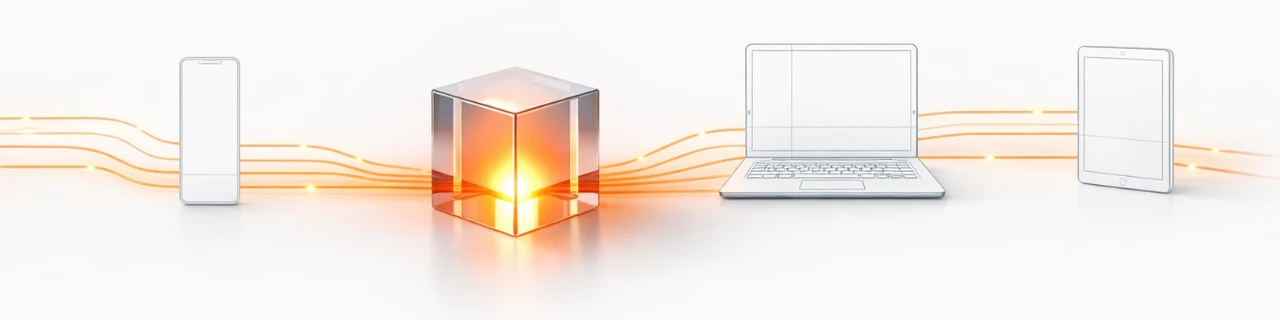
Traditional CMS platforms tie your content to one front end, which becomes a roadblock when you need to publish across a website, an app, and third-party channels at the same time. Techtonic builds headless CMS implementations that separate content management from presentation. Your team publishes once, and the content shows up everywhere, without slowing down your site or app.
API-First Architecture
Omnichannel Publishing
Developer Flexibility
High Performance
Content Governance
Future-Ready Scalability
Headless CMS covers a wide range of implementations - from configuring an existing headless platform to building a fully custom content API. The right approach depends on your content complexity and existing stack, which is exactly the kind of decision a generic template can't make for you.
What we handle in a custom headless CMS build:
This is a natural fit alongside a Next.js, React, or Jamstack rebuild - we frequently pair a headless CMS migration with a front-end performance overhaul in the same engagement.
What is a headless CMS and why is it used?
A headless CMS manages content through an API, separate from how it's displayed, letting one content source power a website, mobile app, and other channels simultaneously instead of being locked to a single front-end template.
How does a headless CMS improve website performance?
By decoupling content from presentation, a headless CMS lets developers build lightweight, optimized front-ends (often with frameworks like Next.js) without the overhead of a traditional CMS's built-in rendering layer, improving load times.
Who should choose a headless CMS over a traditional CMS?
Businesses publishing content across multiple channels - website, app, marketplaces - or teams that need front-end flexibility and top-tier performance should choose headless over a traditional CMS's single-template constraints.
Is a headless CMS scalable for enterprise needs?
Yes - a custom headless CMS is built on cloud infrastructure sized to your traffic and content volume, and its API-first architecture scales more predictably than traditional CMS platforms under high content or traffic loads.
Can marketers manage content easily in a headless CMS?
Yes - a well-built headless CMS includes a content editing interface designed for non-technical users, so marketers can publish and update content without needing a developer for routine changes.
How secure is a headless CMS?
A custom-built headless CMS gives you control over authentication, role-based access, and API security configuration, rather than depending on a shared third-party platform's default security posture.
Does headless CMS support omnichannel delivery?
Yes - that's the core advantage: one content API can feed a website, mobile app, and third-party channels at once, so content is created once and published everywhere without manual duplication.
AAC-06, Shipra Krishna Azure, Kaushambi, Ghaziabad,Uttar Pradesh, India
ankur@wearetechtonic.com
+919910895680
AAC-06, 2nd Floor, Shipra Krishna Azure, Kaushambi, Ghaziabad,Uttar Pradesh, India
ankur@wearetechtonic.com
+919910895680