
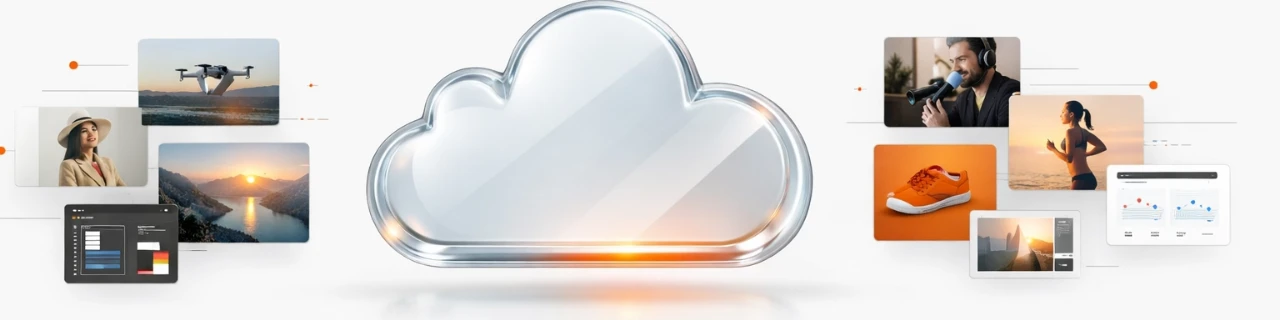
Growing teams lose hours hunting for the right image, video, or brand file across scattered drives and inboxes - and every duplicate or outdated asset that reaches a customer chips away at brand consistency. Techtonic builds custom DAM systems that give your team one governed source of truth: structured storage, role-based access, and fast retrieval, built around how your teams actually work rather than forced into an off-the-shelf module.
Centralised Asset Storage
Secure Access Control
Version Management
Fast Asset Retrieval
Collaboration Support
External Asset Sharing
Most DAM software on the market is built for generic use cases - stock photo libraries, marketing team file-sharing, that kind of thing. It works until your asset structure doesn't match the tool's assumptions: multi-brand hierarchies, SKU-linked product imagery, region-specific approval workflows, or integration with an existing PIM or e-commerce catalogue.
We build DAM systems as part of your actual software stack, not as a bolted-on SaaS subscription. That means:
This is typically delivered as part of a broader custom software engagement - often alongside a CMS, PIM, or e-commerce build for teams managing product photography, marketing collateral, and brand assets in one place.
What is a Digital Asset Management system used for?
A DAM system centralizes storage, organization, and secure sharing of digital files - images, videos, documents, brand assets - so teams always work from the current, approved version instead of scattered copies across drives and inboxes.
How does DAM improve operational efficiency?
It cuts the time teams spend searching for files by centralizing storage and enabling fast, tag-based retrieval, while structured governance prevents duplicate work like re-creating assets that already exist somewhere else in the organization.
Who benefits most from DAM solutions?
Marketing teams, e-commerce and product teams, and any multi-brand or multi-location business managing large volumes of imagery, video, or brand files benefit most - especially where consistency across regions or channels matters
How does DAM ensure brand consistency?
By enforcing a single governed library with access controls and approval workflows, DAM stops outdated logos, off-brand imagery, or unapproved assets from reaching customer-facing channels, since every team pulls from the same current source.
Does DAM support version control?
Yes - every asset update is tracked with full version history, so teams can see what changed, who changed it, and roll back to a previous version if needed, eliminating "which file is current" confusion.
Can DAM integrate with other platforms?
A custom-built DAM can integrate with your existing CMS, PIM, e-commerce platform, or marketing tools via API, so assets flow directly into the systems that need them instead of being manually uploaded to each one.
AAC-06, Shipra Krishna Azure, Kaushambi, Ghaziabad,Uttar Pradesh, India
ankur@wearetechtonic.com
+919910895680
AAC-06, 2nd Floor, Shipra Krishna Azure, Kaushambi, Ghaziabad,Uttar Pradesh, India
ankur@wearetechtonic.com
+919910895680