Web & App Development
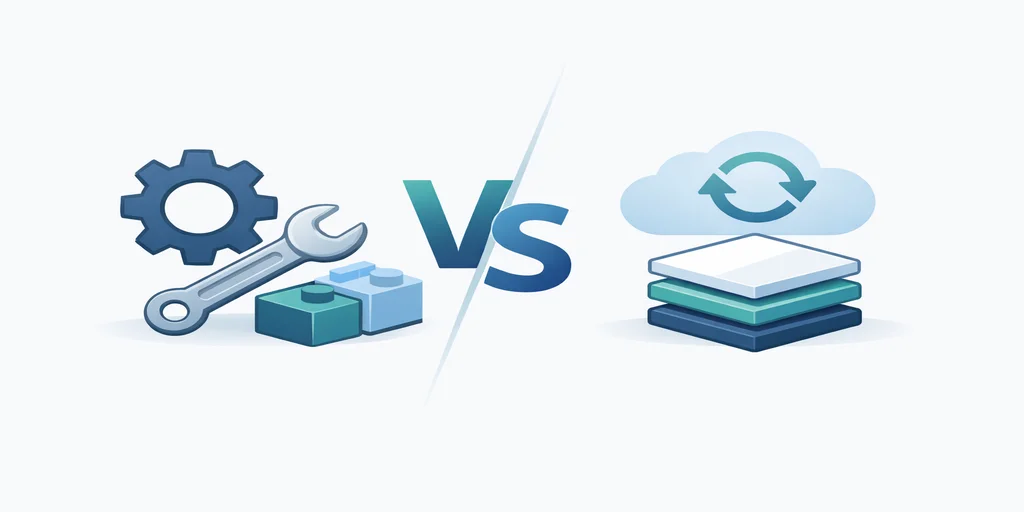
Picture this: You're running a growing business, and your current tools just aren't cutting it anymore. You're faced with a critical decision that could define your company's trajectory for years to come. Do you invest in custom software development tailored exactly to your needs, or do you hop on the SaaS application development train that everyone seems to be riding?
Let's cut through the noise and explore what really matters in 2026.
Software as a Service has transformed how businesses operate. Instead of spending months building custom solutions, you can sign up for a platform today and be operational by tomorrow. Tools like Salesforce, HubSpot, and Slack have proven that SaaS application development can deliver enterprise-grade solutions at a fraction of traditional costs.
Here's what makes SaaS so attractive right now:
The subscription model means you're not dropping six figures upfront. You pay monthly or annually, which keeps your cash flow healthy and your CFO happy. Updates happen automatically—no more scheduling downtime or paying for upgrade cycles. Security patches? Already handled. New features? They just appear in your dashboard one morning.
Plus, scaling is remarkably simple. Adding 50 new users might be as easy as adjusting your subscription tier. The vendor handles infrastructure, maintenance, and all those technical headaches that used to require dedicated IT teams.
But SaaS isn't always the answer, and that's becoming increasingly clear in 2026. Custom software development offers something SaaS can never fully deliver: a solution built around your exact workflow, not the other way around.
Think about your business for a moment. What makes you different from your competitors? Is it your unique process, your proprietary methodology, or your innovative approach to customer service? Now imagine trying to force that uniqueness into a one-size-fits-all SaaS platform. See the problem?
Custom software development shines when:
Your business processes are genuinely unique and give you a competitive edge. When you have complex workflows that SaaS tools force you to "work around" rather than work with, custom development makes sense. You own the code completely—no vendor lock-in, no surprise price increases, no features disappearing because the SaaS company decided to pivot their strategy.
Integration is another huge factor. Maybe you're in manufacturing with legacy systems that have been running for decades, or you're in healthcare with strict compliance requirements. Custom software development lets you build bridges between old and new, creating a cohesive ecosystem rather than a fragmented collection of tools that barely talk to each other.
Here's what's actually happening in 2026: smart businesses aren't choosing between custom software and SaaS—they're strategically combining both.
Use SaaS for your commodity needs. Email, communication tools, basic CRM functions—these are solved problems where SaaS application development has created excellent, cost-effective solutions. Why reinvent the wheel?
But for your core differentiators, consider custom software development. If a process or system gives you competitive advantage, investing in a custom solution protects and enhances that advantage. You're not just buying software; you're building a moat around your business.
Go with SaaS application development when:
You need to move fast and your processes are relatively standard. If your startup needs to validate a market or your established business is adopting best practices from your industry, SaaS platforms probably have you covered. Your team is small and you can't afford dedicated technical staff. When predictable costs and minimal maintenance overhead matter more than perfect customization, SaaS is your friend.
Invest in custom software development when:
Your unique processes create real competitive advantage. When you find yourself constantly fighting against SaaS limitations or paying for features you'll never use while missing features you desperately need, it's time to consider custom development. You have complex integration requirements or strict compliance needs that off-the-shelf solutions struggle to meet. If you're at a scale where subscription costs for hundreds or thousands of users start exceeding custom development costs, the math shifts dramatically in favor of custom software.
AI and no-code tools are changing the game for both approaches. Custom software development is becoming faster and more accessible, while SaaS platforms are becoming more customizable. The gap between the two is narrowing, but the fundamental trade-offs remain.
The real question isn't "custom software or SaaS?" but rather "which problems do I solve with each approach?" The most successful businesses in 2026 are the ones that understand this nuance.
Start by auditing your current tools and processes. Where are you fighting against your software? Where are subscription costs ballooning? Where do you have unique requirements that give you an edge? These pain points and opportunities will guide your decision between custom software development and SaaS application development.
Remember: the goal isn't to have the newest technology or follow the latest trend. It's to have the right technology that empowers your team, delights your customers, and drives your business forward. Whether that's custom-built, off-the-shelf, or a strategic mix of both depends entirely on your unique situation.
What's your business really need? Once you answer that honestly, the path forward becomes clear.